Direct-to-chip liquid cooling may be the technology receiving the most attention in AI data centers, but it’s only one piece of the thermal management equation.
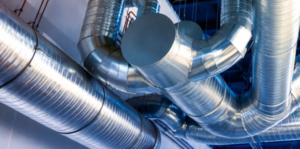 Every watt of heat removed from a processor eventually has to leave the building. That responsibility falls on the facility’s mechanical infrastructure: HVAC systems, chilled water plants, heat exchangers, dry coolers, and cooling towers. These systems work together to reject heat to the outside environment while maintaining the precise temperatures required for mission-critical operations.
For engineers designing these facilities, glycol plays a vital role well beyond the server rack. It protects mechanical systems from freezing, helps maintain water chemistry, and supports reliable operation throughout the year.
Why Climate Control Still Matters in Liquid-Cooled Data Centers
As rack densities increase, it’s easy to assume that liquid cooling replaces traditional HVAC systems.
It doesn’t.
Even facilities with extensive direct-to-chip cooling still require mechanical systems to cool electrical rooms, battery spaces, switchgear, networking equipment, occupied areas, and numerous support spaces. These HVAC systems also support portions of the liquid cooling infrastructure itself, including chilled water production and heat rejection equipment.
Reliable climate control remains essential for maintaining both equipment performance and occupant comfort.
Glycol Protects HVAC Systems from Freeze Damage
Many data center cooling systems extend beyond the conditioned space. Outdoor piping, rooftop equipment, dry coolers, fluid coolers, and air handling coils may all be exposed to freezing temperatures during winter operation.
If water freezes inside these components, the expansion can rupture piping, crack coils, damage valves, and create costly downtime.
By mixing glycol with deionized water, engineers lower the freezing point of the circulating fluid while maintaining efficient heat transfer throughout the system. The exact concentration depends on the site’s minimum design temperature and equipment requirements.
The objective isn’t simply to survive winter—it’s to ensure the cooling system remains available whenever the data center needs it.
Inhibited Glycol Does More Than Prevent Freezing
Freeze protection is only one reason engineers specify glycol. Modern inhibited glycol formulations also provide corrosion protection for the mixed-metal components found throughout mechanical systems.
Typical HVAC and cooling infrastructure may include:
- Carbon steel piping
- Copper heat exchangers
- Brass valves
- Stainless steel equipment
- Aluminum components
- Elastomer seals and gaskets
Without proper inhibitor chemistry, corrosion can reduce heat transfer efficiency, contaminate the system, and shorten equipment life.
Engineered inhibitor packages help maintain cleaner systems while protecting valuable infrastructure over years of continuous operation.
Cooling Towers Present Unique Engineering Challenges
Cooling towers remain one of the most effective methods of rejecting heat from large chilled water systems. However, they also operate in the harshest environmental conditions.
Outdoor exposure means cooling towers experience:
- Freezing temperatures
- Seasonal temperature swings
- Variable thermal loads
- Continuous exposure to moisture
In closed-loop cooling tower systems, glycol helps prevent freezing within connected piping and heat exchangers while supporting consistent operation during cold-weather conditions.
For mission-critical facilities where uptime is non-negotiable, protecting heat rejection equipment is every bit as important as protecting servers.
Balancing Protection and Performance
Like every engineering decision, glycol selection involves tradeoffs.
Increasing glycol concentration improves freeze protection but also changes important fluid properties, including:
- Viscosity
- Thermal conductivity
- Specific heat
- Pumping requirements
Higher concentrations require additional pumping energy and can slightly reduce heat transfer performance.
Rather than selecting the maximum concentration possible, engineers should determine the concentration that provides the necessary freeze protection while maintaining efficient hydraulic performance.
Proper system design considers both environmental conditions and lifecycle operating costs.
Mechanical System Reliability Starts with Fluid Quality
Even a well-designed cooling system depends on maintaining proper fluid chemistry.
Over time, contaminants, oxygen ingress, and depleted inhibitors can contribute to:
- Corrosion
- Fouled heat exchangers
- Reduced thermal performance
- Increased maintenance
- Shortened equipment life
Routine testing and fluid maintenance help preserve inhibitor effectiveness and ensure consistent system performance throughout the life of the facility.
For mission-critical infrastructure, coolant quality should be treated as an operational asset—not an afterthought.
Designing for Year-Round Operation
Data centers don’t have seasonal shutdowns. Whether outdoor temperatures are below freezing or well above 100°F, cooling systems must continue operating without interruption.
Properly specified glycol solutions support year-round reliability by helping engineers:
- Protect outdoor mechanical equipment
- Maintain stable fluid performance
- Reduce corrosion risk
- Extend equipment life
- Improve long-term maintenance planning
As AI infrastructure continues to expand, these considerations become increasingly important for both new construction and retrofit projects.
How Vessco Water Supports Mission-Critical Cooling
Reliable thermal management requires expertise that extends beyond fluid selection.
Through R.L. Deppmann, a Vessco Water company, and the broader Vessco Water Platform, engineers have access to solutions that support the entire mechanical cooling ecosystem, including:
- Heat-transfer fluids and glycol chemistry
- Pumping systems
- Heat exchangers
- Cooling tower support
- Water treatment
- PP-RCT piping systems
- Instrumentation and controls
- Prefabricated mechanical systems
Our team works with consulting engineers, contractors, and facility owners to help design resilient cooling systems capable of supporting today’s high-density computing environments.
Frequently Asked Questions
Why is glycol used in HVAC systems serving data centers?
Glycol protects HVAC systems from freeze damage while providing corrosion protection and stable thermal performance in closed-loop mechanical systems.
Is glycol required in cooling towers?
Not always. Open cooling towers typically circulate water, while glycol is commonly used in associated closed-loop systems, heat exchangers, and outdoor piping that require freeze protection. The specific design depends on the facility’s cooling architecture.
Does glycol improve equipment life?
Yes. Properly inhibited glycol helps protect piping, pumps, valves, and heat exchangers from corrosion, reducing maintenance requirements and extending service life.
Can glycol reduce system efficiency?
Compared with pure water, glycol slightly lowers heat-transfer efficiency and increases viscosity. However, when properly specified, it provides the optimal balance between thermal performance, freeze protection, and equipment reliability.
How often should glycol systems be tested?
System chemistry should be monitored periodically to verify inhibitor levels, pH, concentration, and overall fluid condition. Routine testing helps maintain long-term system performance and prevent avoidable failures.